Urban Forests
There are many kinds of forests. Even cities can be forests.
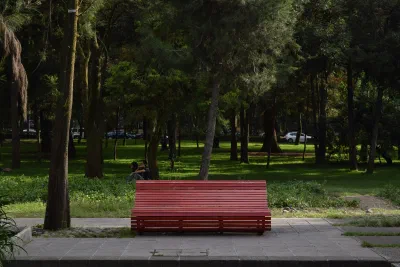
It’s been several centuries since I’ve visited London, and back then I was only there long enough to board a vessel bound for the New World. At the time, the human metropolis seemed messy, loud, and barren of vegetation. But it has changed for the better. That makes me and my bond tree happy.
It seems in July 2019, London was confirmed by the National Park City Foundation as the world’s first national park city. What’s amazing is London has around 8.4 million trees for its 8.6 million residents. That’s almost one tree per person, and many of those people are certainly dryads. The city has over 20% canopy cover as well, and meets the UN definition of an urban forest. The canopy isn’t as dense as I am used to—often around 70% or more—but for an immense human city, 20% is impressive.
What Is an Urban Forest?
The concept of urban forests has been studied since it was suggested by a professor at the University of Toronto in 1965. All the trees and larger woody shrubs that line streets, shade gardens, and decorate the many parks and open land in and around human habitation make up the urban forests. It’s not just the liquidambar street trees filling your street gutters with seed pods every year or the gorgeous cherries with their pink and white blossoms scenting the air. To be considered an urban forest, a city must have a minimum 10% tree canopy coverage. But many cities around the world have more.
Your City Is Probably an Urban Forest, Too
Seattle, the largest city I live near, has a ways to go to be the densest urban forest in the United States, but it is still meets the UN’s definition of a forest. In 2021, it had about 28% canopy cover. The Arbor Day Foundation evaluates cities to be named as Tree Cities of the world. In 2025, Seattle was about the middle of the pack of US cities. However, Renton, Washington, a nearby suburb of Seattle, has been recognized three years in a row as a Tree City of the World. Auburn, Washington has been recognized for four years! Among the most forested cities in the United States are Nashville, Tennessee; Raleigh, North Carolina; and Atlanta, Georgia. The way the humans track and measure the tree density differs, but the end result is that these are three places I would love to live. There are several urban dryad groves that live in those cities. There is a large dryad grove in New York City, which has also been named a Tree City of the World three years running. The Latñi of New York is doing a great job.
Your City Could Become a Tree City
There are five standards your city must meet to be recognized as a Tree City of the World:
- Identify a person or department that is in charge of the trees. I may be biased, but if you know any urban dryads, you should ask one of them to consider the role. They will already be familiar with most of the plants and trees in your city.
- There must be at least one law that governs the care and protection of the trees.
- Your city must demonstrate understanding of its trees and forest resources by doing a recent assessment, inventory, or canopy study.
- There should be an ongoing financial investment (in-kind donations are okay, too) in the urban forest.
- Your city must celebrate the trees and the people who steward them through at least one public event per year.
If you believe your city already qualifies, you can submit an application right now. It’s open from the second Tuesday in September through January 31.
Urban Forests Are Important to Everyone in the City
Dryads are not the only ones who benefit from urban forests. Urban forests create dynamic ecosystems for plants and animals. They help filter the air and water, conserve energy, and provide necessary shade. They also make your city beautiful.
Live and love!
Sources
- National Park City Foundation https://www.nationalparkcity.org/
- Tree Cities of the World Recognized Cities https://www.treecitiesoftheworld.org/global-network
- Tree Cities of the World Standards https://www.treecitiesoftheworld.org/how-it-works/standards
- Application to become a Tree City of the World https://www.treecitiesoftheworld.org/get-started
- USDA Forest Service - Urban Forests https://www.fs.usda.gov/managing-land/urban-forests
- Wood Central - Why London Is Home to the World’s Largest Urban Forest https://woodcentral.com.au/why-london-is-home-to-the-worlds-largest-urban-forest/
- Cascade PBS - Seattle Canopy Study https://www.cascadepbs.org/environment/2023/03/seattle-has-green-lake-sized-hole-its-tree-canopy-study-shows/
- WPLN - More Than 50% of Nashville Is Forested https://wpln.org/post/more-than-50-of-nashville-is-forested-heres-why-it-probably-doesnt-seem-that-way/
- SaportaReport - Atlanta’s Urban Tree Canopy https://saportareport.com/atlantas-urban-tree-canopy-leads-nation-trees-not-protected/columnists/maria_saporta/
- Wake County - Raleigh Land Cover Analysis & Tree Canopy Assessment https://s3.us-west-1.amazonaws.com/wakegov.com.if-us-west-1/s3fs-public/documents/2023-09/Raleigh%20Report_Pages_FINAL_R.pdf
Sources last checked 2026-09-23.
Klifal, Dear reader and Tsitwash for Reading!
Note: Klifal and Tsitwash are words in Dryadic. Klifal means “Hello” and Tsitwash means “Thanks.”
I hope you enjoyed this article! If you liked my unique perspective, you’ll love reading my full story in the novel Digital Dryad by Jennifer Kyrnin. Digital Dryad is available where all books are sold, in print and ebook formats.
Want more tales straight from the dryad’s mouth? Sign up for my newsletter to receive exclusive short stories, behind-the-scenes looks at Digital Dryad, and advance notice of new book releases in the series.
You can also connect with me and other fans of Digital Dryad on Mastodon. Jennifer is active on Mastodon under the handle @htmljenn. Share your thoughts using the hashtag #digitalDryad!
Thank you for joining me on this journey! With your support, I can continue telling my story. I hope to see you again between the pages and in the newsletter!
Sincerely, Sierra
Stay in Touch